
Succession
(the gifts we give to our children)

Consider the angry patriarch of a farm family shouting at the dinner table, swigging from a hidden flask in the barn.
What an asshole, we think. Then, slowly, we understand.
Neither daughter nor son wants to live the life their parents lived. They’re urban people now, with their own unique desires. Succession, a generational or multi-generational dream, becomes impossible. All they can hope, in the end, is that there aren’t too many taxes owing and that their daughter, son, spouses, and children don’t tear each other apart in court over the money.
At Story Engine, we worked with family-owned companies wrestling with this. I was younger then, and so haunted by my own post-graduation struggles in a recessionary job market, that I wondered why these lucky people could not see themselves as owners and managers of a perfectly good light-manufacturing concern.
At a conference where I was asked to speak about using narrative in business strategy, there was a break-out on succession. One of the planned panellists fell ill and the organizer offered to pay me more if I could take his place and “wing it.”
Story Engine’s ownership was spread across two families, and my children were in their “pretty good at colouring” phase at the time, but I’m terrible at saying no to money. I went up on stage to talk about our clients’ experiences without naming names. The woman on the panel with me cried mid-way through her opening remarks.
I found myself in tears listening to her worries, both for the business she inherited from her father and for her children. Neither of her kids was remotely interested in taking over, and she was struggling with the decision to either hire a CEO outside the family or sell.
We invest so much into our businesses and careers, and we sometimes fail to acknowledge the emotional aspect. Finance can be thrilling and devastating, but we tend to forget its consequences on people. Business language is so polluted with jargon and fads that we push feelings away, replacing human fragility with a PESTLE Analysis, Porter’s Five Forces, or just some abstract boasts about resilience.
In family businesses, it’s harder to put emotion in the closet.
My daughters could not help listening to me talk about storytelling in business. They taught me a lot, as tough audiences. Neither of them had any patience for the boring bits, and even when they were pretty good at colouring they could sniff out an inauthentic moment.
Both of them are now studying a fusion of law and liberal arts, still teaching me things. My daughter Avia is a student at the University of Sydney. Though Sydney’s population is approaching six million, it remains a tightly-connected city and as immigrants we have few connections. No one gets a legal clerkship, it turns out, because of a sparkling cover letter.
In Sydney, you have to know someone.
Before she found her current part-time job, in a barristers’ chambers, Avia was desperate. So she created one for herself, based on what she watched me do for most of her childhood. To add a bit of legal flare, she called her business Atticus Consulting (both of us refuse to read To Kill a Mockingbird, the sequel).
(the Atticus Consulting logo)
Atticus Consulting found a client. Avia did story interviews, as she had heard me do them, piled into other research, spent time with the organisation, and distilled it all into a one-page story and an implementation strategy. I helped, but she was the boss of the enterprise.
She asked me to join her, when she presented it. She was amazing, far more confident than I was at twenty. When we walked away from the conference room, afterward, she was upset. Even though she had heard thirty positive things about the work she had done, Avia was — as I once was — focused on the two or three things that did not go as well.
This is true succession.
It was a window into what I had to learn through tense and sweaty sessions with clients, over many years. Stay calm, breathe. People will surprise you. Some of them need to go to the bathroom a lot, they just do, and they don’t mean any disrespect. Others are addicted to their phones. They can’t go two hours without looking. Despite it all being clear in your head, your clients are hearing this the first time and they will want you to do it for them, if you can. This is why there have always been advisors, even in the most ancient texts.
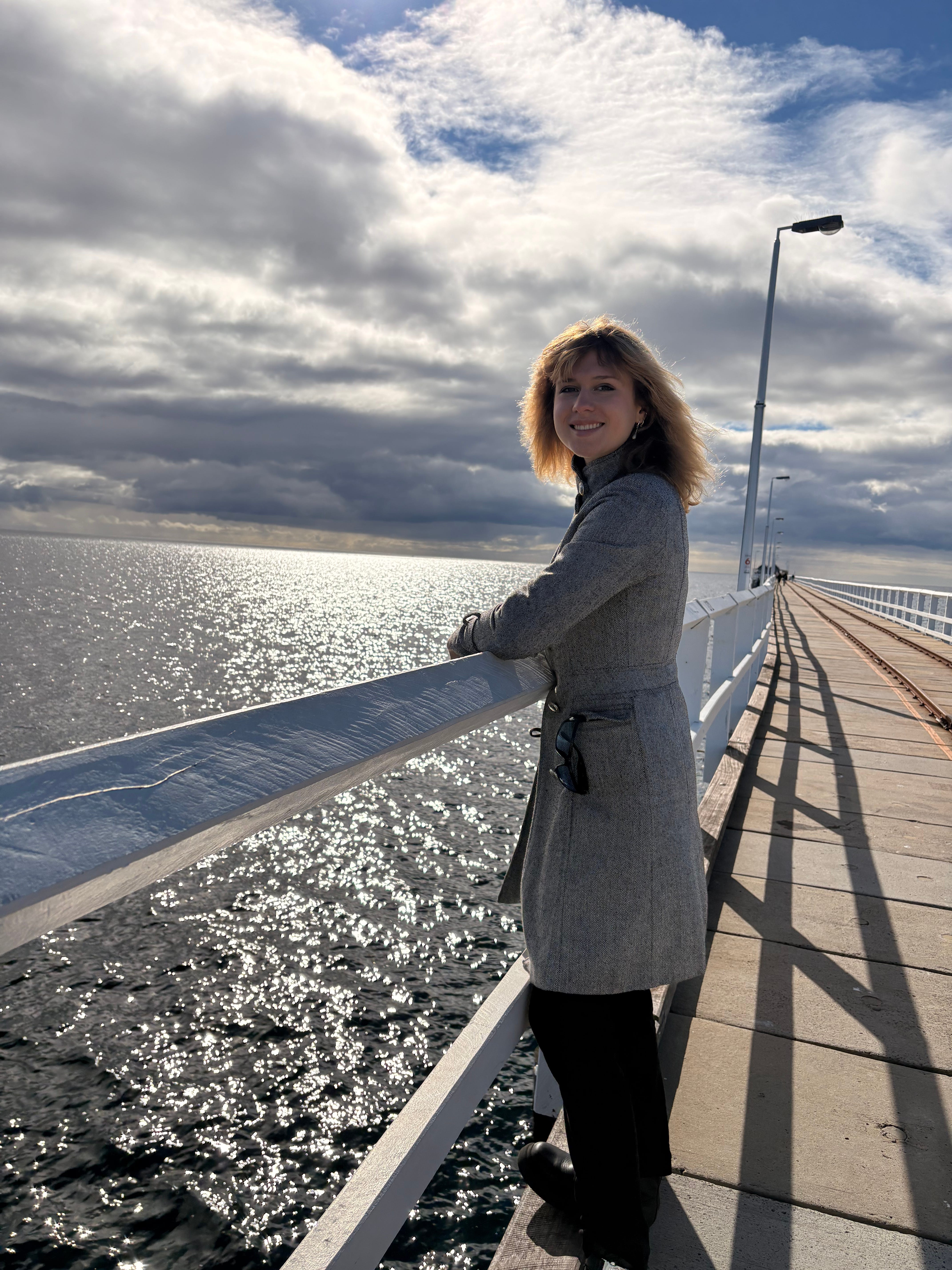
(the CEO of Atticus Consulting on the Busselton Jetty)
Yes, AI is coming for us all. But humans still need humans, to help us and entertain us and keep us out of court, or jail, to build something we cannot build ourselves because our brains do not work that way.
Will Avia fold storytelling into her career as a lawyer? Assuredly. Will she continue in the family business, in some way? I don’t have to be the angry patriarch at the dinner table and I don’t have to swig corn liquor tearfully in the barn because no matter what they do, both my daughters have been infected by the narrative virus. I hope it helps, as I hope it helps you.
When she wanted to annoy me, Esmé, my other daughter, used to say, “Um, like, from a ‘so’ perspective,” folding all of my least favourite business phrases into one phrase.
Infected.
Eloquently shared, as always, Todd. Thanks for posting this important story, Todd!
Welcome to a day in the life of me as the family business storyteller 😂 if Ava ever needs law contacts on the GC let me know :)