
The Empathy Machine

Elon Musk and others have recently launched a campaign against what they call toxic empathy. There was a time, in 2018 or so, when woke culture and the online performance of empathy turned a bit ridiculous. Now we make fun of that era and its excesses. That is how it works.
The phrase “toxic empathy” tries to push it further so Elon Musk and his pals can get even more stuff.
For them, empathy itself is toxic.
In English 101, we read Rozencrantz and Guildenstern are Dead. If you have not read it, or seen it performed, the play concerns two minor characters in Hamlet. Tom Stoppard, the playwright, puts these two doomed idiots at the centre of his story, with Hamlet the overthinking prince off-stage.

(Joshua McGuire and Daniel Radcliffe as Rosencrantz and Guildenstern)
This was before Marvel, Star Wars, and Disney movies became franchises, with the possibility for Iron Man’s foot fungus to get its own movie, limited series, touring ice dance show, and line of popsicles and Halloween costumes.
But back in the 1990s the play shocked and delighted me, gave me a new route into reading and writing. More importantly, it taught me something about how we can build value and meaning into our work.
The Stoppard play is delightful as a thing-in-itself, but it would not have been possible without Shakespeare. Not only because he created Hamlet and the Hamlet universe but because all his characters, in all his plays, are so human. We don’t know much about Rosencrantz and Guildenstern, from Hamlet, as they exist largely as plot devices. This is unusual. Shakespeare is great because of what he did to every other character of consequence in Hamlet: he entered their hearts deeply and remained there, used all their passions and contradictions, their weaknesses, to bring them to life.
Shakespeare was an empathy machine: curious, strategic, and obsessively hard working.
Like any writer, I have tried to learn from him. Even characters who don’t do much of anything in my novels are human beings. I give them backstories. I haunt them. I try.
In What Gentlemen Do, Waylon Gans and his parents Tracy and Stan Gans live next door to a man named Mr. Kang. There is an important scene, near the beginning of the novel, when Tracy discovers her husband has drained their home equity line of credit to bet on a crypto coin. The coin fails. Waylon and his mom are sitting together on the front porch, in the terrible echo of this news, and Mr. Kang is listening to Shaboozey and tending to his yard.
For the next while, Mom tried to explain a Ponzi scheme to me. Then she realized she did not know what it was either so we just sat in silence. Mr. Kang fired up his weed whacker and went after the dandelions that grew between his peonies and the concrete slab of his house. His wife, Helga, had fallen in love with another man and moved to Greece. Mr. Kang wore dress pants and a shirt with a collar for gardening, like he had mixed it up with a job interview. The weed detritus had a sweet wet green smell, even from our front porch.
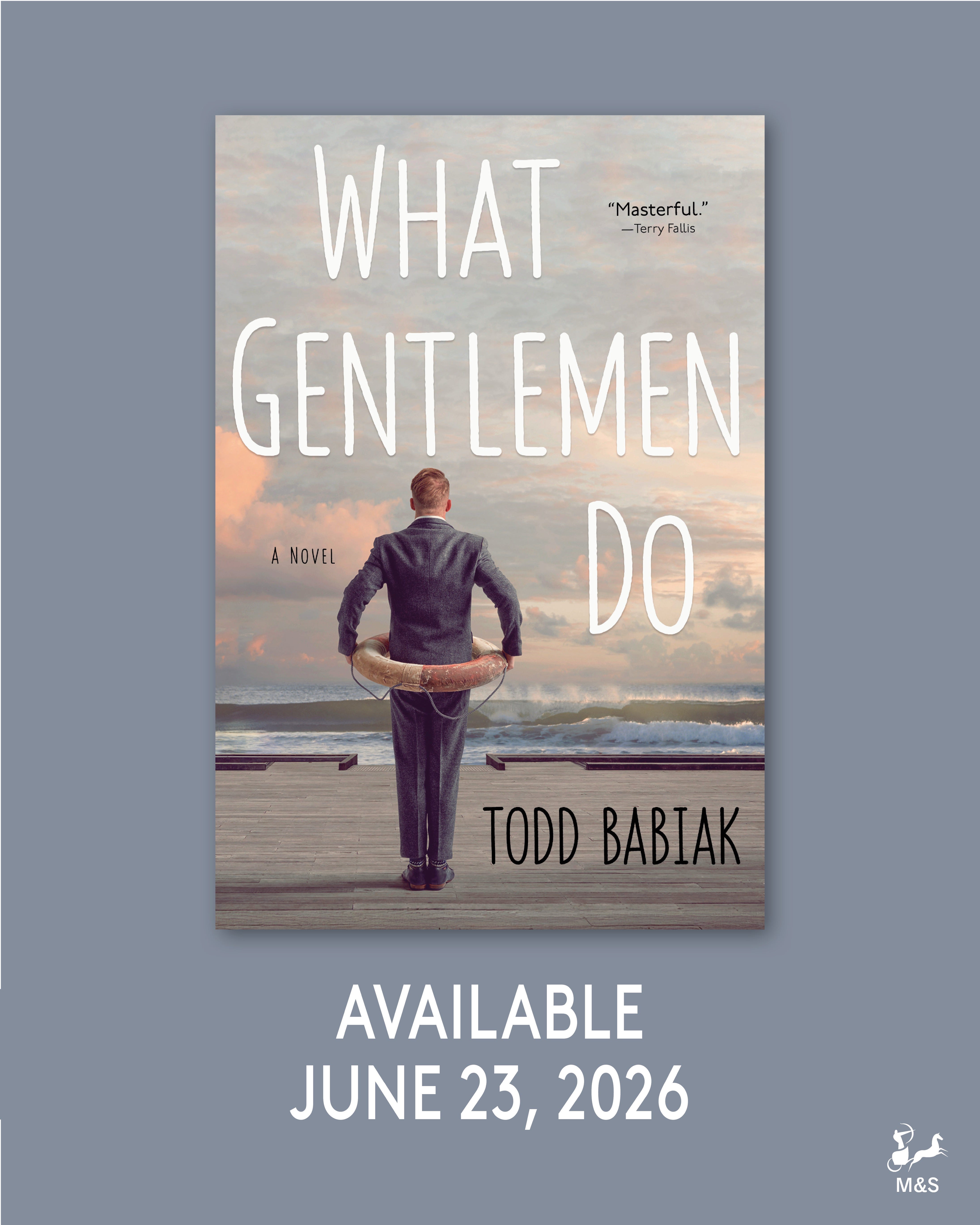
Waylon does not interact with Mr. Kang in What Gentlemen Do but I have a short story in my head about the childless Mr. Kang, born in 1977, how he lives, the quality of his summer evenings, why Helga lit out for Greece and what he plans to do next. Maybe there is an awkward woman with unfashionable spectacles on Laredo Street who notices Mr. Kang out there weed whacking in wool pants and a button-up dress shirt, finds it odd but irresistibly so.
This is what writing fiction teaches you, when you do it every morning. It makes everything better, more alive, when even the Rosencrantzes, Guildensterns, and Mr. Kangs have an inner life. And it leaks into your life…
I have had the good fortune to apply this thinking, and feeling, to my job. Understanding people as people, their desires and motivations, what they aim to achieve together, and helping them articulate it emotionally, without bullshit or jargon, uses the same skills as trying to figure out Waylon — a lost and aggrieved twenty-one year-old who has been seduced into nasty politics.
When someone in the work world is so obsessed with power and advancement they lie and undermine you, you learn to see it from their point of view. They struggle when they are alone with themselves. They lack confidence, despite projecting it. Were they born like this or did something happen to them, when they were kids?
Every time he tries to hurt you, you think: oh that sad, miserable, awful man.
Though it is relative, we are all in pain. We worry and fret, we deal with illness and age and people. For some of us there are whole movements of history and communities of people who derive pleasure from diminishing our humanity.
It enriches our lives to listen quietly, without judgment. There is nothing toxic about trying to understand other human beings, if we accept we cannot change them. It’s a gift to them and to us. Unless they are characters in our books or, in the case of Elon and his pals, we own the algorithms.
What a time to be alive.